
Are Preloved Toys Safe for Children? What Parents Should Check
Every parent wants the best for their child. When it comes to toys, safety is always the top priority. With more families choosing secondhand options, one question comes up again and again: are preloved toys safe for children?
The short answer is yes. Preloved toys can be perfectly safe when you know what to look for. In fact, many used toys are barely played with and remain in excellent condition. The key is knowing how to inspect, clean, and choose wisely.
In this guide, we explain exactly what to check before buying used toys and how to ensure every preloved purchase is safe for your little one.
Why Parents Choose Preloved Toys
Before we dive into safety, it is worth understanding why so many families now prefer secondhand toys.
Children grow fast. Their interests change constantly. A toy that was loved last month can be completely forgotten today. Buying new every time is expensive and wasteful. Preloved toys offer the same fun and developmental value at a fraction of the cost.
Furthermore, choosing used toys supports the circular economy. It keeps perfectly good items out of landfills and gives them a second life with a new family. It is smart, sustainable, and increasingly popular across the UK.
What Makes a Preloved Toy Safe?
Understanding toy condition is the first step to ensuring safety. Not every used toy is suitable for every child. Here is what matters most.
Check the Age Rating
Every toy sold in the UK should display an age recommendation. This is not just a suggestion. It is a safety guideline based on the size of parts, materials used, and potential hazards. Always match the toy to your child's age group, especially for toddlers under 36 months.
Look for the CE Label
The CE label is one of the most important safety markers on any toy. It confirms that the product meets European safety standards. Since January 2021, toys manufactured for the UK market should also carry the UKCA (UK Conformity Assessed) mark.
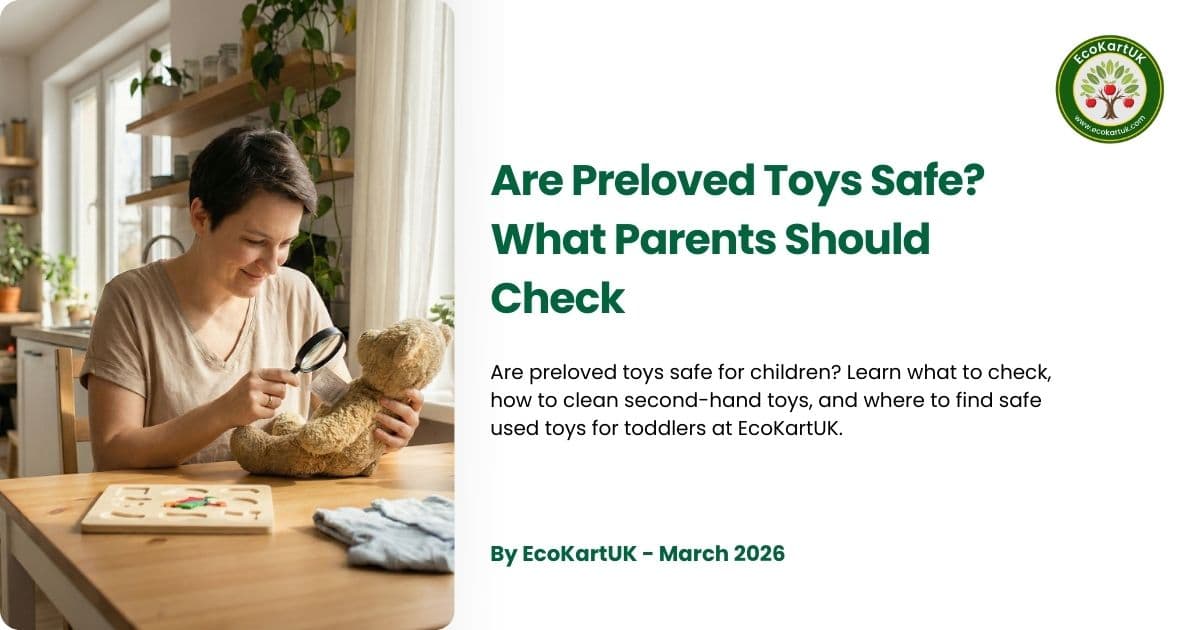
When buying preloved, check that the CE label or UKCA mark is still visible and legible. If neither is present, it may be best to avoid the toy, particularly for younger children. This is a simple but essential part of knowing what to check before buying used toys.
Inspect for Physical Damage
Before giving any used toy to a child, inspect it thoroughly. Look for:
Loose or broken parts that could become choking hazards.
Sharp edges or cracked plastic.
Damaged seams on soft toys where stuffing could escape.
Peeling paint, especially on wooden toys or older items.
Frayed fabric or loose threads.
Inspected toys that pass these checks are generally safe for play. If anything looks questionable, trust your instincts and set it aside.
Check Battery Compartments
For electronic toys, ensure the battery compartment is secure and properly sealed with a screw. Loose batteries are a serious hazard for young children. Also check that there is no corrosion or leaking from old batteries.
How to Clean Second-Hand Toys
Cleanliness is a top concern for parents buying preloved. The good news is that most toys are easy to clean thoroughly. Knowing how to clean second-hand toys properly gives you complete peace of mind.
Plastic Toys
Wash with warm soapy water. For a deeper clean, use a mild disinfectant solution or antibacterial wipes. Rinse thoroughly and allow to air dry completely. Avoid harsh chemicals that could leave residue.
Soft Toys and Teddies
Most soft toys can be machine washed on a gentle 30-degree cycle inside a pillowcase or laundry bag. This protects delicate features like eyes and noses. Always air dry rather than tumble drying, as heat can damage synthetic fibres.
Wooden Toys
Wipe with a damp cloth and mild soap. Do not soak wooden toys, as water can cause swelling and damage. Allow to dry naturally away from direct heat sources. Check for splinters or rough patches after cleaning.
Bath Toys
These require extra attention. Squeeze out any trapped water and check for mould inside. If you can see or smell mould, it is best to discard the toy. Clean bath toys with a vinegar and water solution to prevent future mould growth.
Puzzles and Board Games
Wipe surfaces with antibacterial wipes. Check that all pieces are present and none are damaged or small enough to pose a choking risk.
After cleaning, all cleaned toys should be completely dry before being given to a child. Dampness can encourage bacteria and mould growth.
Safe Used Toys for Toddlers
Toddlers explore the world by putting things in their mouths. This means extra care is needed when choosing safe used toys for toddlers. Here are specific guidelines:
Choose larger toys. Anything small enough to fit through a toilet roll tube is a choking hazard for children under three.
Avoid toys with magnets. Small magnets can be swallowed and cause serious internal injuries.
Skip toys with long strings or cords. These pose a strangulation risk for young children.
Prioritise washable items. Plastic and silicone toys are easiest to sanitise for little ones who mouth everything.
Check paint and coatings. Older toys may contain lead-based paints. Stick to well-known brands with proper safety certifications.
Buying from Trusted Sources
Where you buy preloved toys matters just as much as what you buy. Not all sellers maintain the same standards.
Trusted platforms like EcoKartUK take safety seriously. Every toy listed goes through quality checks. Descriptions include honest condition details, and soft toys are washed and sanitised before being sent to you. This takes the guesswork out of buying used.
Charity shops and car boot sales can offer bargains, but you need to do your own checks. Always inspect items carefully before purchasing and clean them thoroughly at home.
Signs a Preloved Toy Should Be Avoided
Not every used toy is worth buying. Here are red flags to watch for:
Missing safety labels. No CE label or UKCA mark means no guarantee of safety compliance.
Strong chemical smell. This could indicate harmful substances or improper storage.
Visible mould or mildew. Especially common in bath toys and soft toys stored in damp conditions.
Recalls. Check the product against UK toy recall databases. Some toys are recalled for safety issues that may not be visible.
Heavily worn items. Extreme wear can weaken structures and create new hazards.
Must Read
For more guidance on choosing quality preloved toys, check out these helpful articles:
Top 10 Best Preloved Toys Under £5 for UK Families
Where to Buy Second-Hand Jellycat in the UK: Parent's Guide
Conclusion
So, are preloved toys safe for children? Absolutely. With the right checks and proper cleaning, secondhand toys are just as safe as brand-new ones.
The key is knowing what to check before buying used toys. Look for safety labels. Inspect for damage. Clean everything thoroughly. And buy from trusted sources like EcoKartUK, where toys are quality checked and sanitised before reaching your family.
Preloved does not mean lower quality. It means smarter, more sustainable choices that keep children safe and happy while saving money and protecting the planet.
You Might Also Like
Top 5 Places to Buy Second-Hand Kids' Toys in the UK (2026 Guide)
Looking for the best place to buy second-hand kids' toys in the UK? This guide c...
Best Preloved Educational Toys for Back-to-School in the UK: Learn, Play, Save
Beat the back-to-school rush and the high street price tags! Discover why savvy ...