

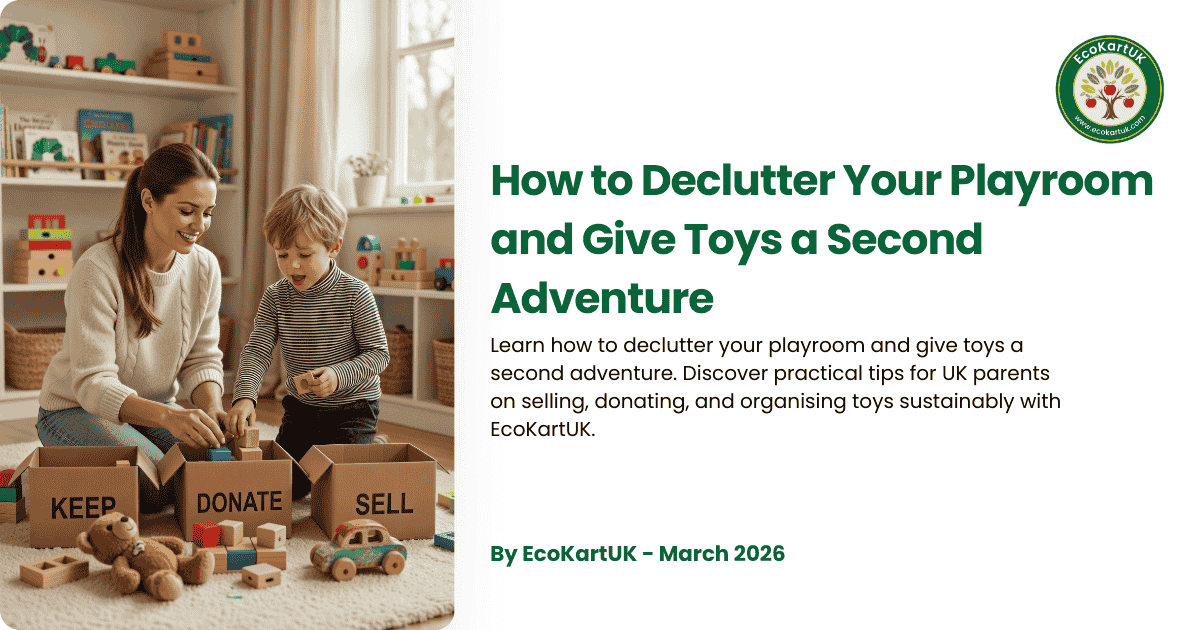
How to Declutter Your Playroom and Give Toys a Second Adventure
Every parent knows the feeling. You open the playroom door and face an avalanche of plastic dinosaurs, forgotten dolls, and puzzles with missing pieces. It is overwhelming. But here is something most parents do not realise: too many toys actually harm your child's ability to play deeply and creatively.
Research consistently shows that children play better with fewer toys. When the choice is limited, they engage more deeply, use more imagination, and play for longer periods. That is why learning to declutter playroom toys UK style is about more than just tidying up. It is about creating a nurturing space that sparks joy and gives those unloved toys a second adventure with a new family.
In this comprehensive guide, we will explore how to tackle the chaos step by step, where to donate or sell your items, and how to maintain a sustainable playroom organisation system that actually works long term.
Why Decluttering Your Playroom Matters
Before you grab a bin bag, it helps to understand why this matters so much.
A cluttered playroom overwhelms children. They flit from toy to toy without engaging deeply. This leads to shorter attention spans and less creative thinking. A tidy, organised space does the opposite. It invites focused play, reduces stress, and teaches children about looking after their belongings.
Furthermore, by passing toys on, you contribute to the circular toy economy. Instead of ending up in landfill, your outgrown baby gear and wooden toys get a new lease of life with another family. It is one of the simplest ways to reduce landfill waste and help other parents save money during the cost of living crisis.
According to the British Heart Foundation, UK households contain an estimated 40 million unused toys. That is a staggering amount of resources sitting idle. By decluttering, you become part of the solution.
Step-by-Step Guide to Decluttering
Step 1: The Big Sort
Choose a time when the kids are occupied or asleep. Pull everything out of the playroom. Yes, everything. This can feel messy and chaotic, but it is essential to see the full picture.
Sort toys into four clear categories:
Keep: Items played with regularly and in good condition.
Donate: Good quality items your child has outgrown or lost interest in.
Sell: Branded, high-quality, or desirable items that could earn you some money.
Recycle: Broken items that cannot be repaired or passed on safely.
Step 2: The Condition Check
For items you plan to sell or donate, check the quality honestly. Are they in Very Good Condition (VGC)? Do board games have all their pieces? Are wooden toys free from splinters or chipped paint?
Honest condition descriptions are vital when passing items on. Nobody wants to receive a "good condition" toy that falls apart on arrival. Being truthful builds trust and helps other families make informed decisions.
Step 3: Involve the Children
If your children are old enough, involve them in the process. Explain that other children would love to play with their old toys. Frame it positively. You are not taking things away; you are giving toys a second adventure.
For younger children, it is often easier to declutter playroom toys UK style when they are not around. Toddlers rarely miss what they cannot see, and it saves everyone from tears over a toy they have not touched in six months.
Step 4: Implement a Toy Rotation System
Once you have decluttered, consider setting up a toy rotation system. Instead of having everything out at once, keep a small selection of toys available and store the rest in boxes or bags.
Swap the toys every two to four weeks. This simple strategy makes "old" toys feel brand new again. It keeps clutter under control and extends the play value of everything you own. Many parents who try this method say it transforms their playroom and their child's behaviour.
Giving Toys a Second Adventure
Once you have your pile of unwanted toys, what next? You have two main sustainable options: donate or sell. Both are brilliant choices that support the circular toy economy.
Where to Donate Used Toys in the UK
If you want to give back to your community, there are many wonderful options.
Charity Shops: Most local charity shops welcome good-quality toys. Call ahead to check what they accept, as some have restrictions on electrical items.
Local Nursery Donation Drive: Check if your local playgroup, nursery, or school needs supplies. Many welcome donations of books, puzzles, and outdoor toys.
Children's Hospitals and Refuges: Some hospitals and women's refuges accept toy donations. Always check their specific guidelines first.
EcoKartUK Donations: We make it easy to pass on your preloved items. Simply use our donation service to ensure your toys find a worthy new home. It is hassle-free and genuinely rewarding.
Sell Second-Hand Toys Online
If you have high-quality or branded items, why not make some money? Selling is a great way to fund the next stage of your child's development.
EcoKartUK: Our platform is designed specifically for families. You can sell toys easily to parents who are actively looking for sustainable, affordable options. Listing is simple, and you reach buyers who genuinely value preloved items.
Local Selling Groups: Great for large items like play kitchens, trampolines, or ride-on toys that are hard or expensive to post.
Car Boot Sales: A traditional option that works well for selling multiple items quickly on a weekend morning.
Building a Sustainable Playroom
Decluttering is not a one-time event. It is a mindset shift. Here are tips to maintain a sustainable playroom organisation system:
One In, One Out: For every new toy that enters the house, one old one leaves. This prevents future build-up.
Quality Over Quantity: Choose durable items like wooden toys that last longer and have better resale value.
Gift Wisely: Ask family members for experience gifts or contributions to savings instead of more plastic toys.
Regular Mini Declutters: Every three months, do a quick sweep. It takes 20 minutes and prevents the chaos from returning.
Must Read
If you are looking for affordable preloved toys to refresh your newly decluttered playroom, check out these guides:
Top 10 Best Preloved Toys Under £5 for UK Families
Where to Buy Second-Hand Jellycat in the UK: Parent's Guide
Conclusion
Decluttering your playroom does not have to be stressful. It is an opportunity to reset, organise, and teach your children valuable lessons about sustainability and generosity.
By choosing to declutter playroom toys, UK parents can create a better play environment while actively supporting the circular economy. Whether you choose to donate or sell your preloved toys, you are giving them a second adventure and making another child smile.
Start your decluttering journey today and enjoy the calm of a tidy, purposeful playroom. Your children will thank you, and so will the planet.
You Might Also Like
Why Preloved Fashion Matters in the UK
Preloved fashion is transforming how the UK shops. This guide explores the vital...
How Preloved Toys and Clothing Save UK Families Money
UK families are feeling the cost of living crisis, so this blog shows how buying...
